


Independent multi-day treks with curated routes and pre-booked mountain huts
Scheduled small group departures led by certified local guides for 4 to 7 members
Individually tailored private adventures organized on the exact dates of your choice
Custom guided day excursions and scenic walks throughout the Italian Alps
All Dolomites, including the iconic Alta Via 1 and Cortina Dolomites & Tre Cime routes, Lagazuoi, Cinque Torri, Sella, and Marmolada
Pristine backcountry of Stelvio National Park, Ortler, Cevedale, Adamello, Bernina, and the Texel Group
Highline treks through the Pennine and Graian Alps, including Gran Paradiso National Park and Aiguilles Rouges
Spectacular ridges of northern Garda, Monte Baldo, scenic Lake Ledro, and Monte Bondone
Home/Hiking Trips/Dolomites Hut-to-Hut Hiking Tours
Dolomites Hut-to-Hut Hiking Tours
Our Dolomites hut-to-hut hiking tours offer the ultimate way to explore the wildest, most breathtaking alpine landscapes and remote areas of the Italian Alps. Designed for passionate walkers, these multi-day treks feature comfortable accommodation at authentic, serviced mountain huts (rifugios) complete with hearty local meals and hot showers. Whether you prefer the total independence of a self-guided itinerary or the expertise of a local guide, our private tours are meticulously organized with specialized 1:25,000 maps, confirmed hut reservations, and 24/7 support to ensure a stress-free mountain adventure.
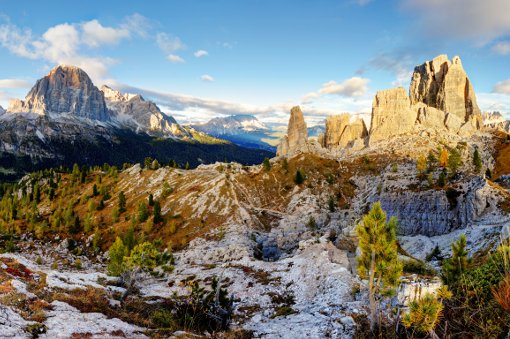
The classic Alta Via 1 from Lake Braies to Belluno and its shorter 9- and 10-day variants. You will see the major highlights of the Dolomites including the Lagazuoi massif, Cinque Torri formation, Monte Pelmo, and the Civetta-Moiazza group. This itinerary runs along normal hiking trails without via ferrata and is suitable for hikers with a normal level of training.
Style
Difficulty
Tour Duration
Start / Finish
Hut-to-Hut Hiking
Level 3
9 - 11 days / 8 - 10 nights
Cortina, Toblach / Belluno, Zoldo
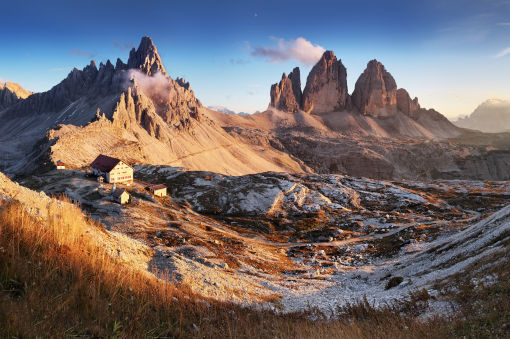
It is a classic hiking route in the beautiful Dolomite mountains framing Cortina d'Ampezzo. These mountains are acclaimed as one of the most visually stunning and frequently visited regions of the Alps. This fascinating itinerary takes you to the famous Dolimites landmarks Cinque Torri, Tre Cime and Lagazuoi.
Style
Difficulty
Tour Duration
Start / Finish
Hut-to-Hut Hiking
Level 3
6 - 10 days / 5 - 9 nights
Cortina d'Ampezzo
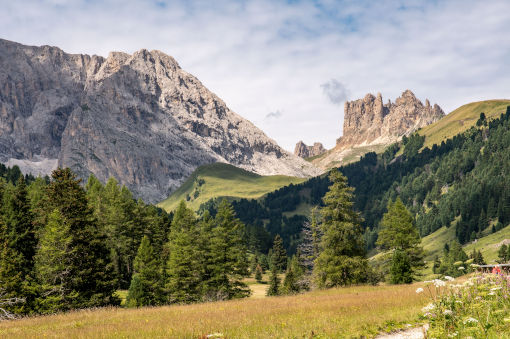
This itinerary stands out for the exceptional diversity of the landscape and flora. This fact, combined with moderately difficult daytime treks, makes this route an excellent choice for a first hut-to-hut hike in the Dolomites. The itinerary covers all altitudinal zones of the Dolomites and allows you to explore the Seiser Alm plateau, Schlern, Langkofel and Rosengarten.
Style
Difficulty
Tour Duration
Start / Finish
Hut-to-Hut Hiking
Level 3
5 - 7 days / 4 - 6 nights
Val Gardena / Karerpass, Carezza
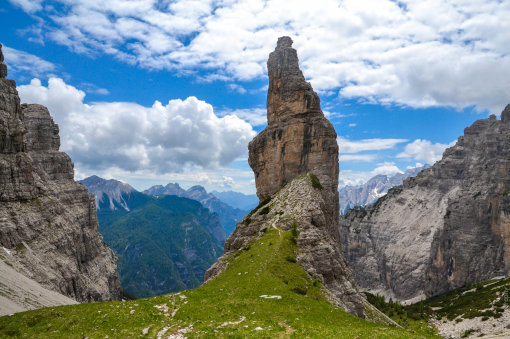
This itinerary runs off the beaten track crossing ever-changing landscapes of the Friuli Dolomites Nature Park. It connects the beautiful landmarks of this majestic mountain system, unique in its level of isolation from civilization, that is difficult to find anywhere else in the Dolomites. Each day on this route offers new contrasts and breathtaking views, from soaring spires to serene and untouched alpine meadows.
Style
Difficulty
Tour Duration
Start / Finish
Hut-to-Hut Hiking
Level 3
6 - 7 days / 5 - 6 nights
Longarone / Forni di Sopra
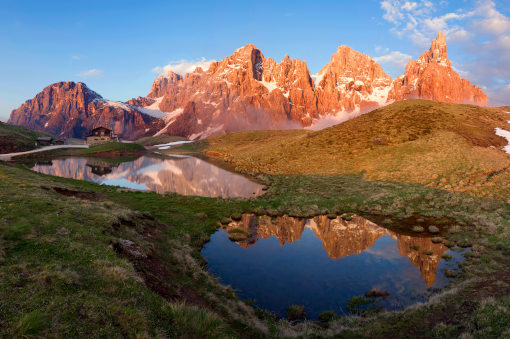
This is the first half of the classic Trek of the Legends, where the trails are relatively easy, and the daytime distances are moderate. The itinerary passes through picturesque and well-known mountains, from Pale di San Martino toward Marmolada and Sella. Despite this, most of the itinerary runs off the beaten track, and you can count on the lack of significant numbers of tourists on the trails. Trek of the Legends is a way to immerse yourself in the magic and beauty of the Dolomites, hiking in solitude through places of great natural and historical value.
Style
Difficulty
Tour Duration
Start / Finish
Hut-to-Hut Hiking
Level 2
7 - 10 days / 6 - 9 nights
San Martino di Castrozza / Val di Fassa
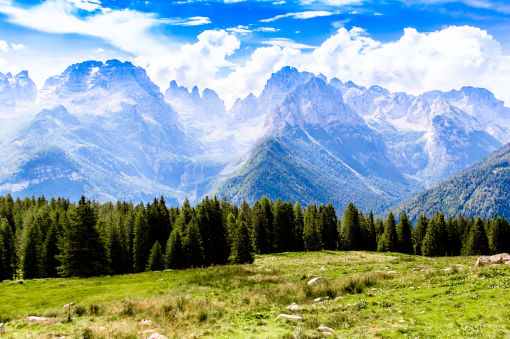
This is a moderate route version of the classical Brenta Dolomites hiking trip - the itinerary is accessible to hikers with a normal level of fitness. You will hike in one of the largest protected areas of the Italian Alps and explore two mountain ranges, Adamello-Presanella and Brenta Dolomites, with a great diversity of terrain and flora.
Style
Difficulty
Tour Duration
Start / Finish
Hut-to-Hut Hiking
Level 3
6 - 9 days / 5 - 8 nights
Val di Sole
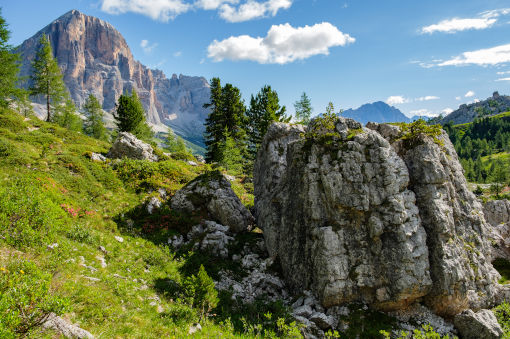
This route runs from Lake Braies to Monte Pelmo. It lets you explore the uncontaminated wilderness of the Fanes-Sennes-Braies Nature Park, the groups of Nuvolau, Croda dal Lago and Pelmo. What’s on the route: fascinating landscapes, beautiful lakes, the breathtaking panoramas of the Dolomites from Lagazuoi and Croda del Becco, the Cinque Torri group.
Style
Difficulty
Tour Duration
Start / Finish
Hut-to-Hut Hiking
Level 3
5 - 8 days / 4 - 7 nights
Cortina / Cortina or Zoldo
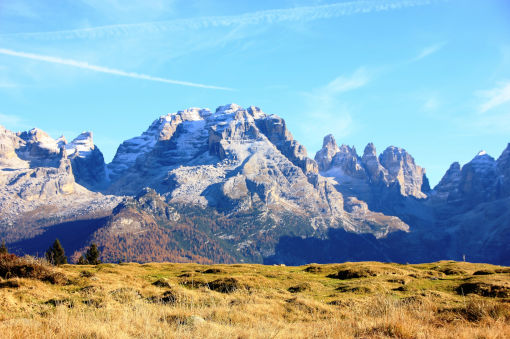
Come to Dolomiti di Brenta for a new and unique hiking experience. The Brenta is different from any other mountains in the Dolomite Alps thanks to its reddish rock, giant size and extraordinarily rich variety of landscapes. Enjoy hiking through the Brenta’s impressive towers, deep gorges and peaceful isolated alpine meadows. This itinerary does not limit you with walking through the most famous southern Brenta but reach the wild northern ridges too.
Style
Difficulty
Tour Duration
Start / Finish
Hut-to-Hut Hiking
Level 4
8 - 11 days / 7 - 10 nights
Val di Sole
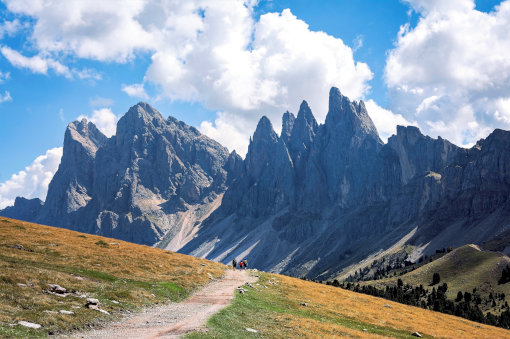
This route features incredibly varied landscapes and spectacular views of the Puez-Odle Nature Park. Hiking through the entire Puez-Odle mountain group, you will see all its main landmarks and be rewarded with breathtaking panoramas every day of the trek. You will hike across rocky lunar plateaus and at the foot of steep cliffs, discovering the rich biodiversity of the Dolomites. The classic itinerary requires 3 full hiking days. The route can be extended into the mountain groups surrounding the neighboring Alpe di Siusi plateau.
Style
Difficulty
Tour Duration
Start / Finish
Hut-to-Hut Hiking
Level 3
5 - 8 days / 4 - 7 nights
Val Gardena
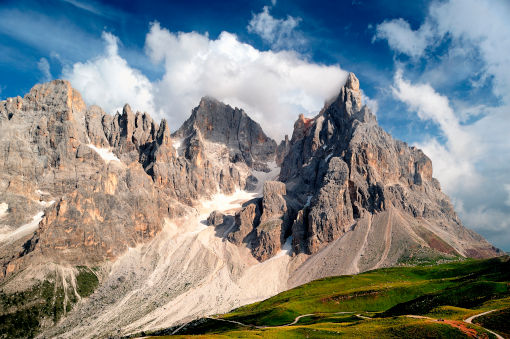
This itinerary takes you through the lunar landscapes of the inmost regions of Pale di San Martino. You are sure to remember from this trip the scenic path across the plateau, its peaks at sunset the way you saw them from Passo Rolle, and the splendid views of the Pale from the eastern tip of the Lagorai range.
Style
Difficulty
Tour Duration
Start / Finish
Hut-to-Hut Hiking
Level 3
6 - 8 days / 5 - 7 nights
San Martino di Castrozza
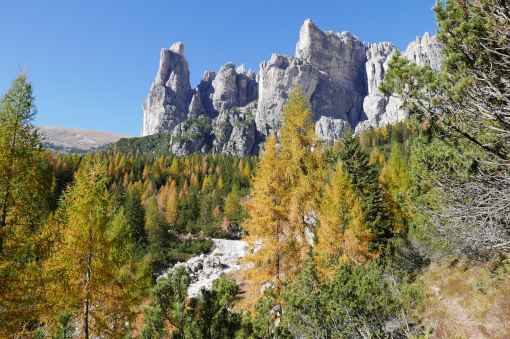
If you'd like to explore the wildest parts of the Dolomites, the Zoldo Loop is one of the best choices. The Zoldo Dolomites have preserved the ambiance of wilderness without the otherwise ubiquitous chair lifts and human voices. This itinerary runs along some of the Dolomites' least-traveled trails that few people know about.
Style
Difficulty
Tour Duration
Start / Finish
Hut-to-Hut Hiking
Level 4
6 - 9 days / 5 - 8 nights
Forno di Zoldo
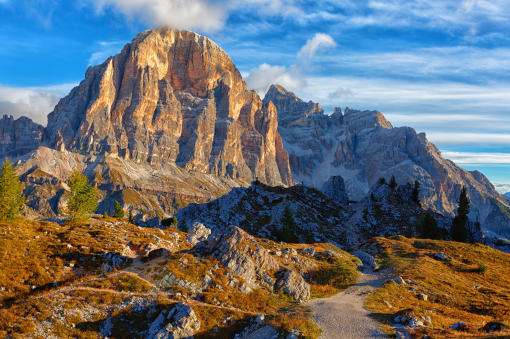
Explore the least frequented paths on Alta Via 1 of the Dolomites to see wildlife, rather than people. The Southern Trek starts at Passo Falzarego from where it runs southwards along the classic AV1 route. Cinque Torri, Monte Pelmo, lakes Coldai and Federa, Civetta, Moiazza, Tamer, Schiara – the further south you go along the trail, the wilder the mountains become and the fewer people you will encounter.
Style
Difficulty
Tour Duration
Start / Finish
Hut-to-Hut Hiking
Level 3
6 - 8 days / 5 - 7 nights
Cortina / Belluno, Zoldo
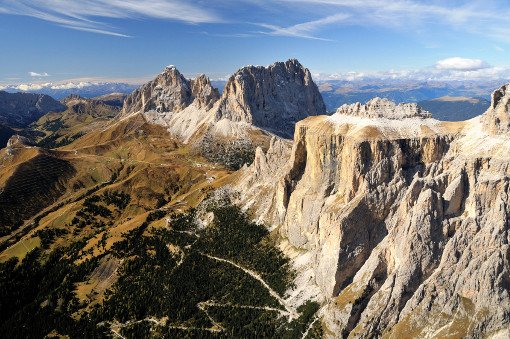
Known as the Trekking of the Legends, this exciting trek runs across the six mountains groups at the heart of the Dolomites. You will hike through the mountains that have in many ways defined the Dolomites: Monzoni, Marmolada, Sella, Sassolungo, Antermoia, and Rosengarten.
Style
Difficulty
Tour Duration
Start / Finish
Hut-to-Hut Hiking
Level 3
6 - 10 days / 5 - 9 nights
Val di Fassa
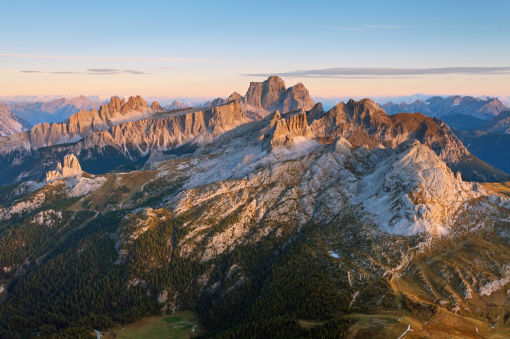
This hut-to-hut hiking route connects the most impressive landmarks of of the Cortina Dolomites. It features the mountain groups of Tofane, Nuvolau and Croda da Lago and thus the terrace of Lagazuoi, Cinque Torri formation, summit of Nuvolau, and lakes Limedes and Federa. You will walk along historical trails and stay overnight at huts built in great locations.
Style
Difficulty
Tour Duration
Start / Finish
Hut-to-Hut Hiking
Level 3
5 - 8 days / 4 - 7 nights
Cortina d'Ampezzo
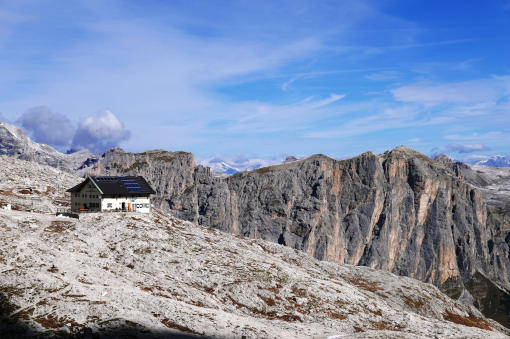
No route in the Dolomites compares to Alta Via 2 in terms of diversity of the landscapes. It links the largest mountain groups of the Dolomite Mountains including Sella and Pale di San Martino famous for their vast lunar landscapes. You will see the towering peaks of the Puez-Odle group and the Marmolada glacier - the only surviving major glacier of the Dolomites.
Style
Difficulty
Tour Duration
Start / Finish
Hut-to-Hut Hiking
Level 4
8 - 12 days / 7 - 11 nights
Brixen or Val Gardena / Fiera di Primero
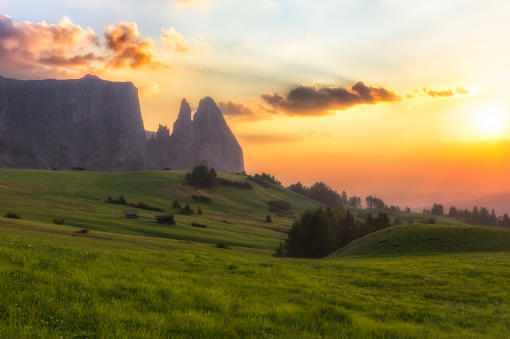
Explore the South Tyrol’s most characteristic mountain groups and enjoy its famous hospitality. Besides Alpe di Siusi, this route features Sciliar, Puez-Odle and Sassolungo. Being a light hiking route, it is made of unfatiguing 4-hour daytime treks. The primary hut-to-hut itinerary of 4 walking days can be complemented with one or two extra day hikes from the basecamp in Val Gardena.
Style
Difficulty
Tour Duration
Start / Finish
Hut-to-Hut Hiking
Level 2
5 - 7 days / 4 - 6 nights
Val Gardena
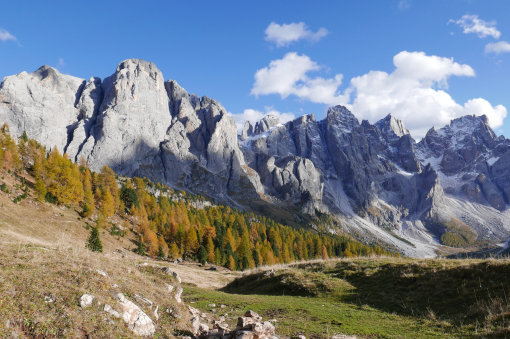
This trek combines the classic Dolomite landscapes with pristine nature and quiet trails. It starts at the foot of Marmolada and leads south through a wide variety of landscapes, while being moderately difficult. On this trek, you will hike through literally every type of terrain in the Dolomites, from idyllic green meadows to the high Pale plateau, where the terrain is barren and lifeless. You will even reach the granite-formed Lagorai Group and its serene Colbricon Lake, where you can immerse yourself in the atmosphere of peace and quiet.
Style
Difficulty
Tour Duration
Start / Finish
Hut-to-Hut Hiking
Level 3
6 - 7 days / 5 - 6 nights
Val di Fassa / San Martino di Castrozza
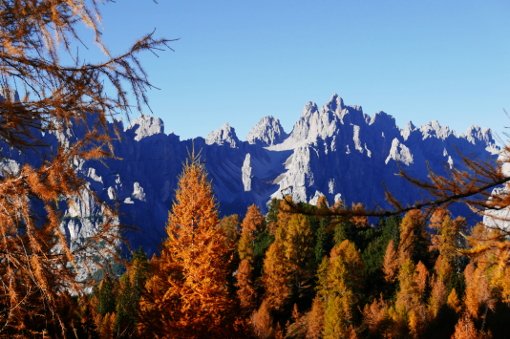
This route runs through the most untouched and completely uninhabited region of the Dolomite Alps. A compact continuous chain of peaks, Friuli Dolomites feature picture-perfect landscapes that are bound to dazzle even the most jaded of seen-it-all hikers. You will enjoy breathtaking views of the mountains in their pristine wilderness: this is one of those places where you can feel yourself completely out of touch with civilization.
Style
Difficulty
Tour Duration
Start / Finish
Hut-to-Hut Hiking
Level 4
7 - 10 days / 6 - 9 nights
Pieve di Cadore
The Ultimate Guide to Dolomites Hut-to-Hut Hiking Tours
A hut-to-hut hiking trip in the Dolomites is more than just a walking holiday – it is a profound immersion into one of the most geologically fascinating and visually stunning mountain ranges on earth. Divided into nine distinct mountain systems, these Europe's oldest carbonate rock formations are famous for their sheer vertical walls, sweeping alpine pastures, and the legendary enrosadira – the fiery orange and pink glow that bathes the peaks at sunset.
To truly experience the wilderness and reach the most remote, untouched corners of the Italian Alps, traversing the trails from one mountain group to another while staying high up in the mountains is the ultimate way to travel.
What to Expect from Mountain Huts (Rifugios) in Italy
The backbone of any successful multi-day trek in the Dolomites is the extensive network of serviced mountain huts, locally known as rifugios. Positioned strategically along the trails at altitudes ranging from 1,500 to 3,100 meters (4,920 to 10,170 feet), these huts offer a level of comfort and hospitality that is unmatched anywhere else in the Alps.
Comfortable Lodging: Accommodation options vary to suit your preferences. You can choose the authentic, budget-friendly alpine experience of a shared dormitory (typically sleeping 6 to 10 guests). Alternatively, most of the handpicked huts we work with feature private rooms for two, three, or four hikers – perfect for couples, families, or groups of friends seeking privacy.
Modern Amenities: Forget the clichés of roughing it. Most mountain huts in the Dolomites are equipped with hot showers and reliable facilities, allowing you to refresh and unwind after a rewarding day on the trail. Note: Hot water is precious at high altitudes, so showers typically operate via tokens costing on an average 3 to 5 Euros (approx. 3.50 to 5.50 USD) for a 5-minute warm shower.
Exceptional Alpine Dining: One of the highlights of a Dolomites hut-to-hut trip is the cuisine. Even at high altitudes, far from civilization, you will enjoy a rich combination of traditional South Tyrolean flavors and classic Italian dishes. Our standard bookings include half-board (breakfast and hearty evening meals). You will taste local cheeses, salted speck, fresh risotto, polenta, and homemade pasta prepared with wild herbs, mushrooms, and mountain berries.
Essential Hut Etiquette & Rules: To maintain a welcoming atmosphere at high altitudes, all guests follow simple, traditional rules of alpine courtesy. First, hiking boots must be left at the entrance; huts provide indoor slippers, though we recommend bringing your own light synthetic slides. Second, to ensure everyone rests well before a demanding day, strict night silence is observed from 10:00 PM when common room lights are turned off. If you plan an early morning departure, it is best practice to pack your backpack the evening before to avoid making noise in the dormitories.
Seamless Logistics: How Our Self-Guided Hiking System Works
Planning a multi-day trek independently can be overwhelming, especially when dealing with language barriers and the extreme scarcity of hut availability. At Mont Trekking, we leverage our deep local expertise to handle all the complex arrangements, ensuring your hiking holiday is entirely stress-free.
When you book a private guided or self-guided hut-to-hut hiking tour with us, we take care of everything behind the scenes.
Securing Hut Reservations: Due to the immense popularity of iconic routes like the Alta Via 1, premium rifugios fill up nearly a year in advance. We secure your overnight stays, base camp hotels, and necessary transfers.
Navigation and Safety Packs: You will never have to worry about getting lost. While the main trails in the Dolomites are carefully signposted with clear marker posts at every fork, we provide our self-guided hikers with highly detailed, day-by-day hiking schedules. You will receive specialized 1:25,000 paper maps as well as offline electronic GPS routes for your smartphone.
24/7 On-Call Support: From the moment you arrive at your base camp until your final descent, our team provides continuous emergency support, keeping you updated on weather conditions and trail safety.
Tour Ratings & Difficulty Levels
To help you choose the ideal itinerary, we categorize our multi-day routes based on trail technicality and physical demands:
Level 2 (Easy): Mostly meadows and panoramic paths at altitudes of 1,700 to 2,300 meters (5,570 to 7,545 feet) with occasional ascents up to 2,600 meters (8,530 feet) and limited sections of more demanding terrain. These routes average approximately 5 hours of walking daily with moderate elevation gain and loss.
Level 3 (Moderate): Standard alpine crossings, including the world-famous Alta Via 1, with daily cumulative ascents up to 1,000 meters (3,280 feet). Suitable for active hikers in good physical condition.
Level 4 (Challenging): Rugged wilderness tracks and steep high-altitude passes that require excellent stamina, a sure foot, and dependable trekking gear.
Choosing Your Route: From Iconic Trails to Hidden Wilderness
Whether you are stepping onto alpine trails for the first time or you are a seasoned trekker seeking a demanding physical challenge, our collection of over two dozen itineraries offers the perfect fit.
The Icons (Alta Via 1 & Alta Via 2): For a classic first-time experience in the Alps, nothing compares to the Alta Via No.1, running from Lake Braies through world-renowned landmarks like the Lagazuoi massif, Cinque Torri, and Monte Pelmo. If you prefer a more rugged, technically challenging route across lifeless, lunar-like high-altitude plateaus and steep cliffs, the legendary Alta Via 2 is an extraordinary alternative.
The Famous Valleys (Cortina & Val di Fassa): Explore the dramatic spires around Cortina d'Ampezzo or hike through the heart of the mountains on the historic Trek of the Legends in Val di Fassa, crossing the Monzoni, Marmolada, and Sella groups.
Off-the-Beaten-Track Adventures: If you wish to experience the raw wilderness away from human voices and chairlifts, our specialized hut-to-hut treks in the Friuli Dolomites Nature Park or the giant reddish towers of the Brenta Dolomites offer pristine solitude and untouched alpine meadows.
When to Plan Your Hut-to-Hut Adventure: Seasons & Weather
The official trekking season in the Dolomites is relatively short, primarily determined by the opening dates of the managed rifugios and winter snow conditions. While the peak period runs from July through mid-September, some itineraries remain perfectly accessible from the second week of June until mid-October.
June (The Early Season): Trails below 2,400 meters (7,870 feet) are usually clear by mid-June, but shadowed high-altitude passes may hold patches of winter snow. Early itineraries like the Alta Via 1 Northern Trek or Alpe di Siusi are highly recommended for this month.
July & August (High Summer): This is the most stable and sunny period. Days are warm, but you should prepare for typical afternoon alpine thunderstorms. We strongly advise hitting the trail by 8:00 AM to cover most of your daily distance before lunchtime. Crucial tip: The central two weeks of August coincide with Ferragosto (the peak Italian holiday season). During this time, trails around Tre Cime, Lagazuoi and Lake Braies are exceptionally busy; we recommend choosing less-traveled routes like the Southern Alta Via 1 Trek for mid-August.
September & October (Autumn Solitude): September sees the lowest rainfall of the season. Although night temperatures can drop below freezing, sunny days offer crystal-clear air and unparalleled visibility. By early October, most high-altitude huts close, but lower paths remain wonderfully peaceful.
Smart Packing: Why You Don't Need a Heavy Backpack
Because you will be staying in fully staffed, warm mountain huts with exceptional dining, there is absolutely no need to carry heavy camping gear, tents, or days worth of food (camping is actually prohibited in the nature reserves).
All you need for a Mont Trekking hut-to-hut itinerary is a lightweight 35-to-50-liter (approx. 2,130 to 3,050 cubic inches) backpack. Packing your essential clothing layers, a change of clothes for the evenings, rain gear, and a few light snacks should keep your total pack weight under 8 to 12 kilograms (17.6 to 26.4 lbs). Traveling light allows you to fully enjoy the movement, safely navigate moderately difficult terrains, and focus entirely on the staggering 360° panoramas surrounding you.
Footwear & Trekking Poles: Your safety on rugged limestone trails depends heavily on your gear. We strongly recommend high-cut hiking boots with a stiff sole and a breathable waterproof membrane (like Gore-Tex) to stabilize your ankles and protect against sharp rocks. Light trail-runners are not suitable for multi-day alpine crossings. Additionally, we highly advise using telescopic trekking poles – they significantly reduce the impact on your knees during long descents and help maintain perfect balance on loose gravel paths.
Connectivity & Payments: While high-altitude huts are expanding digital services, it is critical to carry around 30 to 40 Euros (approx. 33 to 44 USD) in cash per person for each day to cover drinks, snacks, or shower tokens, as satellite card terminals frequently lose connectivity. For mobile data along the trail, setting up an eSIM with a roaming plan that utilizes multiple local networks (such as TIM and Vodafone) ensures the best possible coverage in remote areas.
Mont Trekking
Zona Commerciale 9
38027 Malé (TN) Italia
Zona Commerciale 9
38027 Malé (TN) Italia
Contact Us
Phone: +39 0463 63 60 80
Monday - Friday, from 09:00 to 17:30 CET
Phone: +39 0463 63 60 80
Monday - Friday, from 09:00 to 17:30 CET


Sitemap Terms and Conditions Privacy Policy
© 2003 - 2026 Mont Trekking. All content published on the website is protected by intellectual property rights in accordance with the Berne Convention, Italian Law 633/1941 and subsequent national and international legislation. Mont Trekking is a registered trademark of Campo Base Srl.
© 2003 - 2026 Mont Trekking. All content published on the website is protected by intellectual property rights in accordance with the Berne Convention, Italian Law 633/1941 and subsequent national and international legislation. Mont Trekking is a registered trademark of Campo Base Srl.